
Japandi Interior Design Malaysia
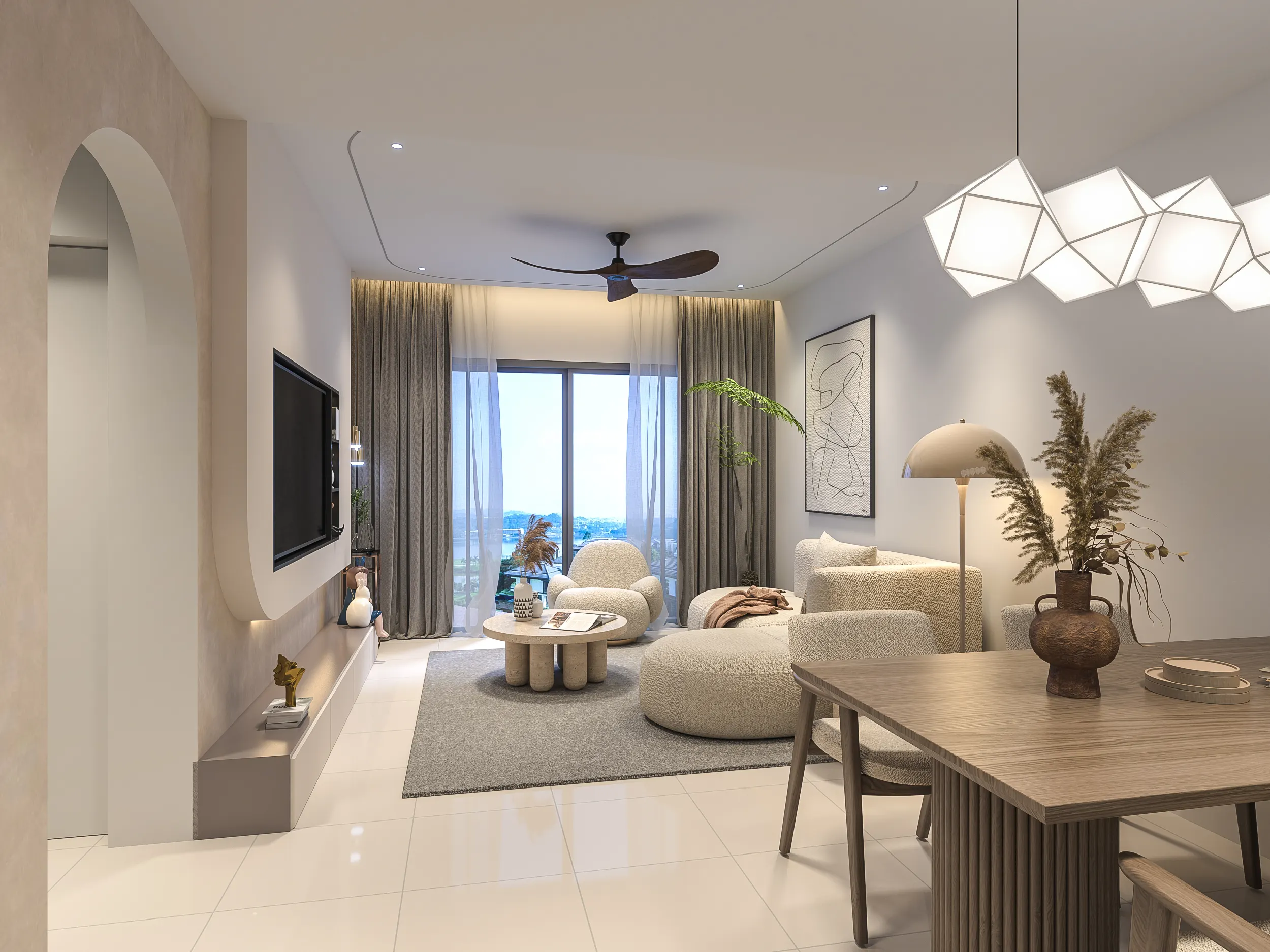
Japandi combines Japanese simplicity with the warmth of Scandinavian interiors. Think natural timber, muted colours, simple furniture and fewer things competing for attention. We design Japandi-style homes across Kuala Lumpur and Selangor for homeowners who want a calm interior that still feels warm and lived-in.
Send us photos of the space, your property type and the tones or materials you're drawn to. We'll help translate that into a workable palette and renovation scope.
Restraint that still feels warm.
Japanese and Scandinavian interiors have more in common than you might expect. Both value simple forms, natural materials and practical furniture. Japandi borrows the restraint of Japanese design, then softens it with the lighter, more relaxed feel associated with Scandinavian homes.
In practice, that means a Japandi home in Malaysia leans on timber tones, matte and textured surfaces, a muted palette and a handful of well-chosen pieces rather than a room full of decor. The room should feel calm without feeling bare — the warmth has to come from somewhere, usually the material choices and the lighting, since the style deliberately avoids the busyness that would normally carry a room.
Japandi works across property types in KL and Selangor, from compact condos where a quiet palette helps a small space feel larger, to landed homes where the same materials can carry across several rooms without becoming repetitive.
For a broader look at how Japandi compares with other approaches, see our interior design styles guide.
Six Japandi design ideas worth testing
The best ideas add warmth through material and light, not through more furniture.
Choose one dominant timber tone
Repeating a single wood tone across flooring, cabinetry and furniture gives the room a sense of order without needing more decoration.
Layer warm lighting at different heights
Several softer light sources at different heights usually read as more Japandi than a single bright ceiling fixture.
Build in storage before styling
A calm Japandi room depends on having somewhere to put everything — concealed storage does more work than any single decor choice.
Add texture, not colour
Linen, rattan, stone-look tile and matte plaster give a neutral palette depth without introducing contrast that fights the calm.
Keep furniture low and simple
Low-profile sofas, simple joinery lines and unfussy silhouettes are closer to Japandi than ornate or heavily upholstered pieces.
Let one object carry the room
One strong piece usually works better than five small ones competing for attention — a ceramic bowl, a textured vase or a piece of timber furniture can be enough.
Where Japandi shows up most
The style translates a little differently depending on the room.
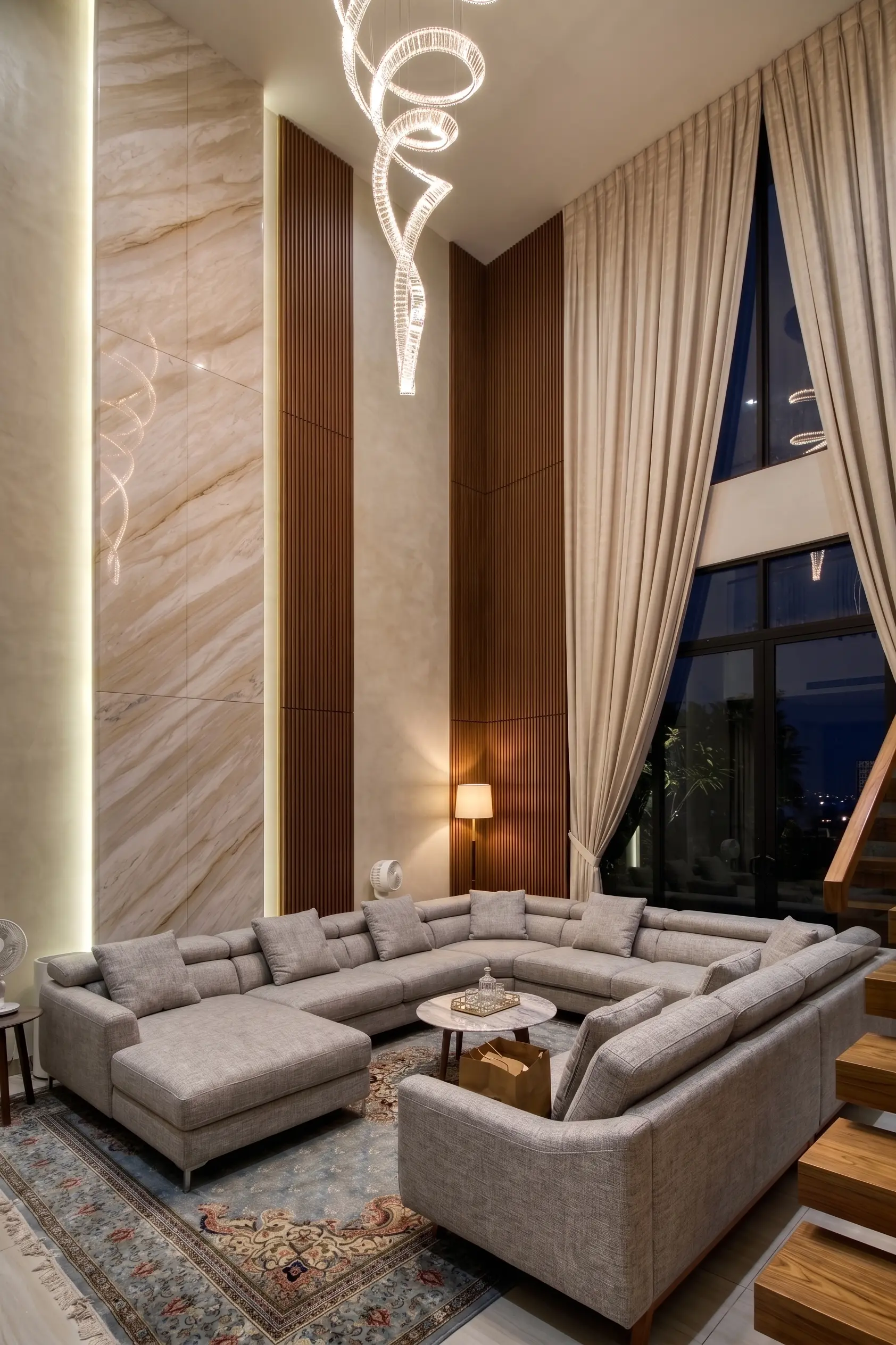
Living and dining
Low furniture, a dominant wood tone and layered lighting set the tone for the rest of the home.
Kitchen
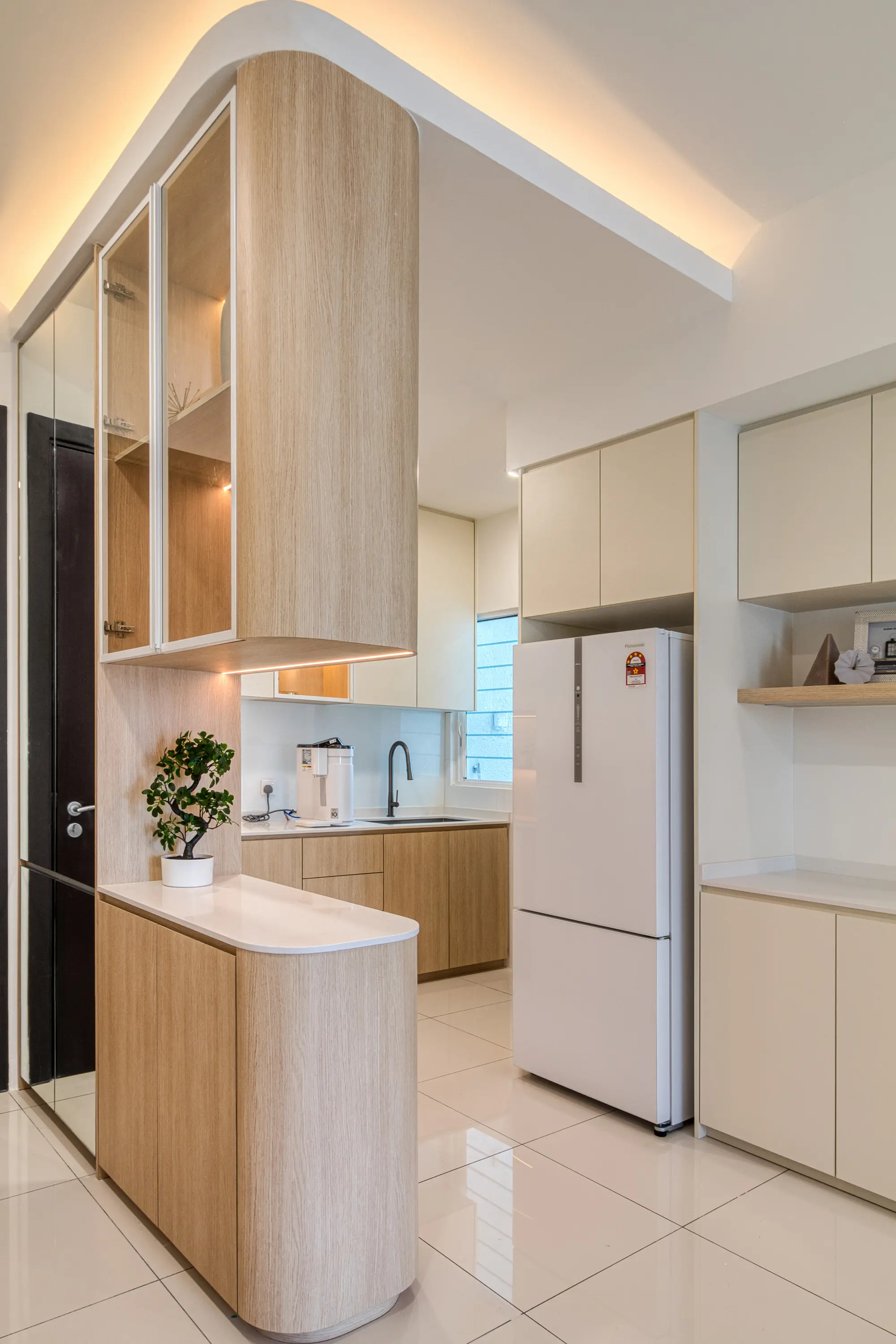
Flat-panel cabinets, matte finishes and a quiet colour palette keep the space feeling calm and practical.
Bedroom
Soft textiles, concealed storage and warm, dimmable lighting support the atmosphere the style is meant to create.
Bathroom
Natural stone or stone-look tile, a floating vanity and simple fittings keep the same look going in the bathroom.
In Japandi, the material palette does a lot of the visual work.
Because Japandi rooms deliberately avoid pattern and strong colour, the materials stand out more. A mismatched timber tone or an overly glossy surface is easier to notice here than in a busier interior.
This is one reason material samples matter more here than in most styles — a swatch under warm evening light can look very different from the same swatch under a showroom fluorescent tube.
Malaysia's humidity and strong daylight also need to be part of the selection. Timber-look laminates or properly sealed veneer may be more practical in some areas, while pale walls and large windows need checking in the actual room. Warm lighting should work alongside air-conditioning, not make the home feel colder when the doors and windows stay closed.
Japandi vs MUJI vs Scandinavian
All three styles favour simplicity, but the priorities differ.
| Style | Characteristics | Common fit |
|---|---|---|
| Japandi | Japanese restraint blended with Scandinavian warmth and a considered accent piece or two. | Homeowners wanting a calm but not austere aesthetic. |
| MUJI | Minimal visual clutter, heavy emphasis on hidden storage, very neutral palette. | Condos and family homes focused on daily function. |
| Scandinavian | Light colours, softer furnishings, more decorative layering and brighter contrast. | Living spaces focused on comfort and casual warmth. |
Japandi
Japanese restraint blended with Scandinavian warmth and a considered accent piece or two.
- Common fit
- Homeowners wanting a calm but not austere aesthetic.
MUJI
Minimal visual clutter, heavy emphasis on hidden storage, very neutral palette.
- Common fit
- Condos and family homes focused on daily function.
Scandinavian
Light colours, softer furnishings, more decorative layering and brighter contrast.
- Common fit
- Living spaces focused on comfort and casual warmth.
What changes the cost of a Japandi-style home
The style itself doesn't set the budget — the underlying renovation scope does.
Storage and joinery
Concealed storage across the home is what keeps a Japandi interior calm, and it's usually the largest line item.
Timber and stone finishes
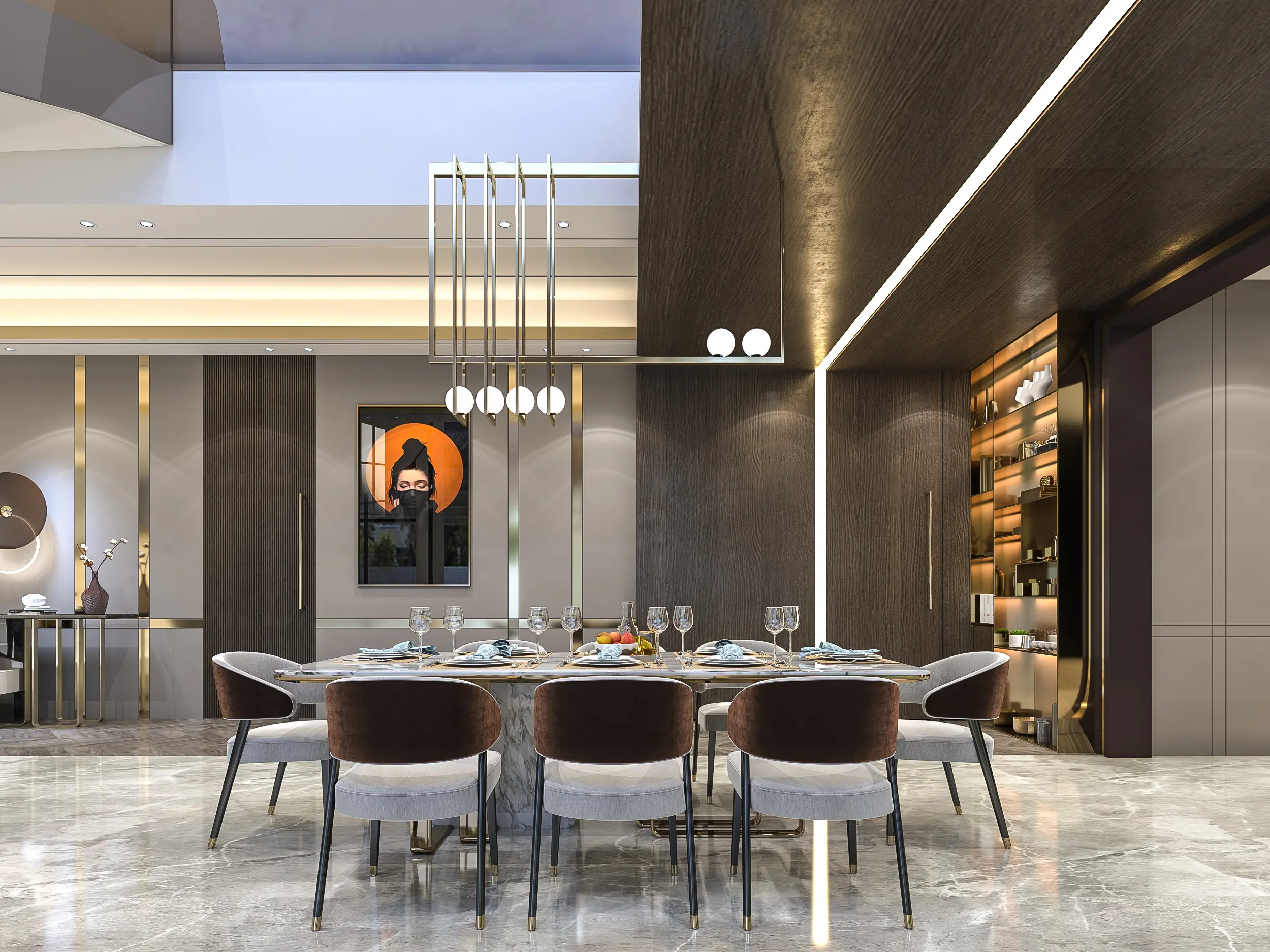
Real or high-quality wood-look materials and natural stone or stone-look tile affect cost more than the palette itself.
Layered, warm lighting
Several smaller light sources and dimmers cost more upfront than a single ceiling light, but help create the right atmosphere.
Refresh or full renovation
A furniture and paint refresh costs very differently from a renovation that changes flooring, cabinetry and wet areas.
Planning bands, not quoted prices. Pricing depends on property size, carpentry, materials and site condition — a site visit is needed for an exact number.
Three common Japandi scenarios
A condo refresh with existing furniture
Walls, flooring and lighting change first, with existing timber and neutral furniture kept where it fits the new palette.
A full renovation from a busier existing scheme
Flooring, cabinetry, ceiling and lighting are redone to move from a mixed or high-contrast interior toward a consistent Japandi palette.
A landed home carrying the palette across floors
The same wood tone, storage approach and lighting repeat from the ground floor up, so the whole house feels cohesive rather than designed one room at a time.
How a Japandi design enquiry usually runs
Understand the space and the mood
We start with photos, your property type, reference images and the tones or materials you're drawn to.
Set the material palette
Agree the dominant timber tone, surface finishes and colour range before any carpentry is drawn.
Plan storage and layout
Work out where everything goes so the finished home can stay visually calm day to day, not just on move-in day.
Detail lighting and materials
Layer lighting circuits and confirm material samples under real site conditions before ordering.
Price and sequence the build
Confirm what is and isn't included and coordinate trades so the finished result matches the agreed palette.
Calm doesn't have to mean cold.
Japandi gives a home a quiet, ordered feeling without stripping out warmth. Done well, it can be relatively easy to live with once the storage is properly planned.
For related planning, compare interior design styles, Scandinavian interior design, minimalist interior design and wabi-sabi interior design.
Japandi interior design, answered
What is Japandi interior design?
Japandi blends Japanese and Scandinavian design principles — the restraint, natural materials and quiet craftsmanship of Japanese interiors with the light, warmth and comfort of Scandinavian homes. The result favours natural wood, muted tones, low-profile furniture and rooms with fewer, better-chosen objects rather than an empty, austere look.
Is Japandi the same as MUJI style or Japanese minimalism?
They overlap but aren't identical. MUJI style leans heavily on practical, hidden storage and a very restrained palette. Japandi allows a bit more warmth, texture and a curated accent piece or two — a piece of pottery, a textured rug, a warmer wood tone — while still keeping the room calm. Japanese minimalism is closer to MUJI, with even less visual decoration.
Does Japandi work in a Malaysian condo or apartment?
Yes, and it often suits compact units particularly well. The style's emphasis on fewer, well-chosen pieces and built-in storage helps a smaller condo feel calmer and less cluttered without needing extra square footage.
Is Japandi suitable for Malaysia's climate and lifestyle?
Yes, but the materials need to suit the conditions. Choose finishes that can handle humidity, use warm lighting alongside air-conditioning, and check how strong daylight falls on timber-look surfaces and pale walls. In a Malaysian home, Japandi works best when the calm palette is matched with practical ventilation, easy-clean surfaces and storage for everyday clutter.
What materials define a Japandi home in Malaysia?
Light to mid-toned timber, matte cabinet finishes, natural stone or stone-look surfaces, woven textures like rattan or linen, and warm neutral paint tones. Glossy, high-shine finishes and strong colour contrasts generally work against the style.
How do I keep a Japandi interior from feeling cold or empty?
The warmth comes from material choice and lighting, not from filling the room. Layered, warm-toned lighting, textured textiles, a few considered plants and visible wood grain do more for the feeling of a Japandi home than adding more furniture or decor.
How much does Japandi-style interior design cost in Malaysia?
Cost depends on property size, carpentry, flooring, lighting and how much of the existing renovation is being replaced rather than refreshed. As with any style, the palette itself doesn't set the budget — the scope of carpentry, wet-area work and materials does. A site-specific quotation is the only reliable way to confirm a number.
Can Japandi be combined with existing furniture?
Often, yes. Because the style favours a limited palette and simple forms, existing timber furniture, neutral sofas and plain textiles can usually be worked into a Japandi scheme, especially if a few busier or high-contrast pieces are set aside first.
Is Japandi suitable for a landed home in Malaysia?
Yes. The style adapts well to larger homes, where the quiet palette and natural materials can carry across multiple rooms without feeling repetitive, as long as storage and material consistency are planned across the whole house rather than room by room.
Do condo Japandi renovations in KL need management approval?
Most condo renovations do, including drawings, contractor registration, a deposit, lift booking and confirmation of permitted working hours. This applies regardless of the style chosen, so it's worth confirming your building's requirements early.
Do I need an interior designer for a Japandi-style home?
It helps more than the look suggests. A restrained palette with few pieces means every proportion, joint and material transition is visible — there's nowhere for a mistake to hide. An interior designer mostly earns the fee here on material selection, lighting layering and storage planning, rather than on sourcing a handful of decor pieces.
Tell us the mood you're after
Send photos of the space, your property type and any reference images you like. We'll help translate that into a Japandi palette, materials and a realistic renovation scope.
Request a consultation